For generations, Uganda’s lakes have sustained entire communities. For families living along the fishing corridor, fishing has provided food, income, school fees and employment. For many young people, the lake has been their primary source of livelihood.
But as Government strengthens enforcement measures aimed at protecting Uganda’s fisheries, another question demands attention: what happens to the people whose livelihoods are disrupted in the process?
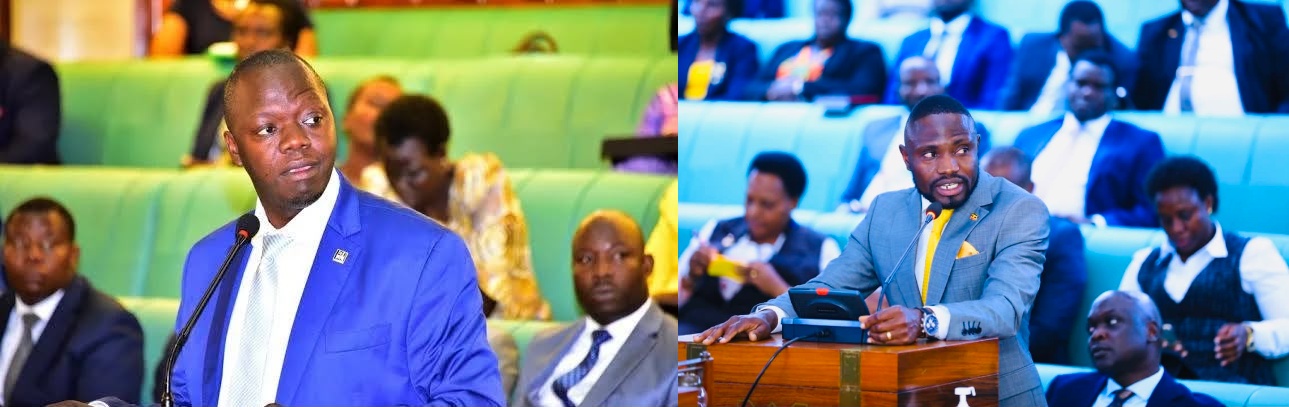
This was the concern raised on the floor of Parliament by Hon. Emaju Peter Paul, Member of Parliament for Kasilo County.
Hon. Emaju challenged Government to address the situation of young people being pushed out of fishing activities without adequate alternatives through which they can earn a living.
At the heart of his intervention was a simple question: when a young person is taken away from fishing, what alternative livelihood is available to them?
For fishing communities in Kasilo and elsewhere, this is not an abstract policy question. Fishing supports households, pays school fees and sustains local economies. Restricting access to that livelihood without creating viable alternatives risks leaving affected young people and their families economically vulnerable.
Hon. Emaju therefore called upon Government to look beyond enforcement and consider the economic consequences for the communities affected.
Responding to the concern, the Minister of State for Agriculture responsible for Fisheries, Hon. Migadde Robert Ndugwa, indicated that the Ministry is fast-tracking a presidential pledge of UGX 1 billion to support the rehabilitation of fishermen in districts within the fishing corridor.
The Minister’s response is significant because it acknowledges that fisheries management cannot focus solely on enforcement. Communities affected by changes in the sector also require support to transition towards sustainable sources of income.
The presidential pledge could provide an important pathway for fishermen and young people whose livelihoods have been affected. Such support could help communities transition into areas such as aquaculture, agriculture, fish value addition, vocational skills, small enterprises and other productive activities suited to their local economies.
The task now is to ensure that the pledge moves from commitment to implementation and that the intended support reaches the communities for whom it was promised.
For Hon. Emaju, this is where accountability remains important. Raising the matter in Parliament places the livelihood concerns of fishing communities before Government and creates an opportunity to follow up on the implementation of the presidential pledge.
Protecting Uganda’s fisheries is necessary. The lakes must remain productive for future generations. But conservation policies must also recognise the people whose lives and livelihoods have been built around those resources.
Enforcement alone cannot provide an alternative income.
Conservation alone cannot create employment.
Sustainable fisheries must therefore go hand in hand with sustainable livelihoods.
Hon. Emaju’s intervention brings that principle into focus. As Government works to protect Uganda’s lakes and fisheries, the fishermen, young people and families affected by those measures must remain part of the conversation.
The question now goes beyond what fishermen are being asked to leave behind.
It is about what opportunities they will be given to build next.
For the fishing communities of Kasilo and across Uganda’s fishing corridor, the Ministry’s commitment to fast-track the presidential pledge is therefore an important development. The next measure of progress will be its implementation and its impact on the lives of the people it is intended to support.
God bless the people of Kasilo, and God bless Uganda.
EPP MEDIA TEAM